Local SEO
Emergency Service SEO: Owning Near Me Now Searches in Your Trade
OUR SERVICE AREA
DM. Digital serves businesses across the USA and is open 24/7 for SEO in the USA. We handle Google Business Profile, Local SEO, Website Design, Content Strategy, Analytics & Performance and AI Visibility - data-driven, professional, and ROI-focused.
Let's get you more clients
Get your free SEO audit. We'll help you get more leads, visibility, and clients for your local business.
It is 2am. A pipe bursts under the kitchen sink in a Summerlin home, and water is spreading across the floor fast. The homeowner grabs a phone, types "emergency plumber near me," and starts calling the first few names that show up. Whoever answers first gets the job.
That single moment is where emergency service businesses win or lose. The furnace dies during a Denver cold snap. A drain backs up in a Chicago two-flat. A homeowner in Henderson smells gas at midnight. These people are not comparing quotes or reading a ten-page website. They want help right now, and they trust whoever shows up first in search.
Planned service searches and emergency searches are not the same animal. Someone shopping for a kitchen remodel might spend two weeks reading reviews and getting three bids. Someone standing in an inch of water wants a phone number and a truck.
Emergency service SEO is built around speed and trust in the first few seconds. Near me searches with high local intent behave in ways that reward businesses ready to answer immediately. Here is what makes them different:
Winning these jobs means showing up where panicked people look and making it dead simple to reach a real person. The businesses that treat emergency searches like normal SEO get left behind.
When something floods, sparks, or stops working, people do not craft careful queries. They type short, urgent search terms like "no heat tonight" or "burst pipe help" or "electrician emergency near me." The search behavior shifts from research mode to rescue mode.
A stressed homeowner is not comparing five companies side by side. They tap the first result that looks trustworthy, has good reviews, and shows a phone number. If a business is not in that top group, it might as well not exist for that search.
We see this every winter in older neighborhoods like the ones near downtown, where aging furnaces fail on the coldest nights. People search fast, call fast, and remember whoever answered. Matching the exact panicked language they use is half the battle.
The lesson is simple. Businesses that write their pages in plain, urgent words - the same words customers type - get found more often than those hiding behind formal service jargon.
Here is a gap most trades never think about. A huge share of emergencies happen between 6pm and 6am, yet many competitors go dark after hours. Their phones roll to voicemail and their listings show "closed."
That silence is an opening. A business visible and reachable at midnight scoops up after hours calls that competitors literally sleep through. When three plumbers are listed and only one answers at 1am, the choice makes itself.
True 24/7 availability is a real edge, not a slogan. It shows in Google Business Profile hours, in how fast the phone gets picked up, and in whether the website makes clear that help is available right now.
We have watched businesses double their overnight bookings just by being the one company that actually answers when the neighborhood needs help most. Nights and weekends are where the easy wins hide.
When someone searches an emergency term on a phone, Google shows the local three-pack first - three business listings with a map, ratings, and call buttons. That box is prime real estate for urgent searches.
Emergency callers rarely leave the Google map pack. They tap one of those three listings, see the reviews, and hit call. The blue links below barely get a glance during a crisis.
Landing in that three-pack takes proximity, relevance, and a strong profile. Our team focuses heavily on local ranking and map pack optimization because it drives the fastest, highest-intent calls for emergency trades.
If a business is not in the map pack for its core emergency terms, it is fighting for scraps. Everything else in this guide points back to earning and holding that spot.
The Google Business Profile is the front door for emergency searches. It shows up in the map pack, holds the phone number, and tells Google when a business is open. Get it right and the calls follow.
Good GBP optimization for urgent trades comes down to a few settings that matter far more than the rest. Categories, hours, buttons, and service areas do the heavy lifting.
Most businesses set up a profile once and forget it. Emergency trades cannot afford that. A profile with wrong emergency hours or a missing category loses jobs every single night.
GBP categories tell Google what a business does and which searches to show it for. The primary category carries the most weight, so an emergency plumber should list "Plumber" or "Emergency plumber service" as the main choice.
Secondary categories widen the net without diluting focus. A plumbing company might add drain cleaning, water damage, and water heater repair as secondary categories to catch related emergency searches.
Picking the wrong primary category is a common mistake. A business listed only as "Contractor" will miss the specific plumber or HVAC searches that emergency customers type. Precision beats vagueness here.
We review a client's categories against what actually gets searched in their city, then match them tightly. Small changes here often move a listing into the map pack for terms it never ranked for before.
If a business offers 24 hour service, the profile should show it. Setting business hours to "Open 24 hours" tells Google to serve that listing for late-night searches that filter by what is open now.
But honesty matters. Marking 24-hour availability and then letting calls go to voicemail at 2am backfires fast. Frustrated callers leave one-star reviews, and those reviews drag down rankings and trust.
For businesses that are not truly around the clock, it is better to list accurate hours and use an answering service or chat to catch overflow. Fake availability costs more than it earns.
We help clients align their real capacity with what their profile promises. When the hours are accurate and someone actually answers, both reviews and rankings hold strong over time.
The click to call button turns a search into a phone call with one tap. On mobile, this is the single most-used feature for emergency listings, so the number must be correct and go straight to a person.
GBP messaging adds a second path for people who cannot talk out loud or want a quick answer first. When enabled, messages need fast replies, because a slow response feels worse than no button at all.
The goal is to shorten the path from search to booked job. Every extra step - a landing page, a form, a hold queue - loses a percentage of panicked callers to the next company.
Our approach through GBP profile optimization keeps these buttons active, accurate, and monitored so no urgent lead slips through the cracks.
Emergency trades should define service areas by the neighborhoods and cities they actually cover. Listing specific areas tells Google exactly where to rank the business for near me searches.
Local specificity beats a giant radius. A business that lists real neighborhood targeting - naming areas like Summerlin, Green Valley, or the arts district - signals genuine local presence better than "we serve the whole metro."
Overreaching on service area can hurt. Claiming to cover an entire county spreads relevance thin and weakens rankings in the core neighborhoods where most jobs come from.
We map service areas to match where a business can actually reach fast, then reinforce those areas across the profile and website. For deeper local coverage, our local SEO services tie the profile and site together.
Ready to Grow Your Local Business?
DM. Digital helps local service businesses dominate Google with custom-built websites.
The Google Business Profile pulls people in, but the website has to close the deal. Dedicated emergency and location pages help a site rank for urgent searches and convert stressed visitors into calls.
A near me now visitor gives a page a few seconds to prove it can help. Pages built for this moment lead with a phone number, a promise of fast response, and quick reassurance.
Generic homepages rarely convert emergency traffic. Purpose-built pages that speak to the exact crisis do far better at turning a search into a booked job.
An emergency page has one job: get a panicked reader to call fast. The phone number belongs at the top, big and tappable, before anything else on the screen.
Response time matters most to someone in crisis. State it plainly - "We answer 24/7 and reach most homes within 60 to 90 minutes" - so the visitor knows help is close.
The page should reassure as much as inform. Short lines about being licensed, insured, and ready right now calm a stressed reader more than a wall of service descriptions.
We build these pages using lead-focused landing pages that keep the phone number visible and the message clear. The fewer distractions, the more calls the page earns.
Location pages capture searches tied to specific parts of a city. A page for "emergency plumber in Henderson" ranks better for Henderson searches than a single citywide page trying to cover everywhere.
Good city landing pages name real streets, neighborhoods, and local landmarks. Mentioning the older homes near the historic district or the newer builds out by the freeway shows Google and readers that the business truly serves that area.
Each page should carry its own reviews, service details, and response promise for that area. Copying the same text across pages with only the city swapped fools no one and can hurt rankings.
Our team plans these pages around real search demand. For businesses in growing markets like Henderson or Las Vegas, neighborhood pages capture calls that a single page would miss entirely.
Nearly all emergency searches happen on a phone. If a page takes more than three seconds to load, a stressed visitor bounces and calls the next result instead.
Mobile speed and page load time decide whether the phone rings. Compressing images, cutting heavy scripts, and using clean code keep pages fast even on a weak cell signal in a garage or basement.
Thumb-friendly design matters as much as speed. A giant call button within thumb reach, no tiny links, and no pop-ups blocking the number all help a panicked visitor act fast.
We build sites around mobile-first, fast-loading design because in emergencies, a half-second delay is the difference between a booked job and a lost one.
An anxious buyer needs proof before they trust a stranger with their flooded home. Trust signals like licenses, guarantees, and reviews should sit where they see them first, near the phone number.
Concrete conversion elements work best. A license number, a "satisfaction guaranteed" line, and a star rating pulled from real reviews reassure faster than vague claims about quality.
Photos of real trucks, uniformed techs, and local crews add a human layer. People calling at midnight want to know a real, local team is coming, not a faceless call center.
Placing these signals above the fold shortens the decision. When a scared homeowner sees a licensed, well-reviewed, guaranteed local business, they stop scrolling and dial.
Ranking for emergency jobs starts with knowing the exact words customers type in a crisis. Keyword research for urgent trades looks different from planned-service research.
Emergency keywords and long-tail searches lean toward problems and urgency, not polished service names. Matching that language is how a business shows up at the exact moment of need.
The best emergency keyword lists come from real calls and real searches, not guesses. We mine the phrases customers already use and build content around them.
People search by the problem, not the service name. They type "water coming up through floor drain" or "AC blowing hot air" instead of "hydro-jetting" or "condenser repair."
Symptom searches reveal the plain language a business should use on its pages. Matching problem keywords to the words homeowners actually type helps a site rank for the searches that lead to real jobs.
We build lists of these symptom phrases for each trade, from "no hot water" to "breaker keeps tripping" to "sewage smell in basement." Each one becomes a heading or section that catches that search.
Our keyword research and intent mapping connects these symptom terms to the right pages, so a searching homeowner lands on content that speaks to their exact problem.
Time-based words signal emergency intent. Searches with "tonight," "now," "same day," or "24 hour" tell Google and the business that this person needs help immediately.
Working these urgency modifiers into content matters. A page that says "same day and after-hours service tonight" ranks and converts better for urgent searches than one that only mentions general availability.
These modifiers also fit naturally into headings, buttons, and meta descriptions. "Call now for same day emergency service" speaks directly to the searcher's mindset.
We weave urgency language through emergency pages so they match the panicked, time-sensitive searches that drive the highest-value calls. The words "now" and "tonight" pull in real bookings.
Blending neighborhood names and local references strengthens relevance for nearby searchers. A page that mentions specific areas, major roads, and known landmarks tells Google exactly where the business belongs.
Local keywords work best when they are real. Naming the neighborhoods near a business, the streets crews drive daily, and the local water or utility districts shows genuine presence, not keyword stuffing.
Neighborhood terms also match how locals search. Someone might type "emergency electrician near the university district" rather than the full city name, and pages that use those terms catch those searches.
We pair symptom and urgency terms with local references to build pages that read naturally and rank locally. This mix is how a business owns near me now searches across every corner of its service area.
When two listings sit side by side in the map pack, reviews often decide who gets the call. Ratings, review volume, and fast responses shape both rankings and that split-second choice.
Online reviews carry extra weight in emergencies. A scared homeowner trusts a business with 200 recent five-star reviews over one with 12 old ones, even if both are close by.
Reputation management is not a set-and-forget task. It takes steady review generation and thoughtful responses to keep a listing strong enough to win urgent clicks night after night.
Review freshness signals a business is active and reliable right now. A listing with recent reviews from this month reads as trustworthy, while one whose newest review is two years old raises doubt.
Review volume backs up the freshness. A high count of ratings tells a panicked caller that many neighbors trusted this company and got good results, which lowers the risk of dialing a stranger.
At 2am, there is no time to research deeply. Star ratings and recent reviews do the vetting in a glance, which is why steady review flow directly drives emergency calls.
We help clients build a steady stream of fresh reviews through GBP review generation and response, so their listings always look active when it counts.
The best moment to ask for a review is right after the emergency job is done. The homeowner just watched a crew stop the flood or restore the heat, and gratitude is at its peak.
Timing beats everything with review requests. A quick, friendly ask before the tech leaves, followed by a text with a direct review link, gets far more responses than an email sent days later.
Making it easy matters too. A short link straight to the Google review box removes friction, so a thankful customer can leave a review in under a minute.
We set up review request systems that fire at the right moment and point to the right place. Consistent asks after each save keep the review count climbing month over month.
A bad review does not have to cost future jobs. A calm, professional reply shows other readers how the business handles problems, which often matters more than the complaint itself.
Good review responses stay polite, own any real mistake, and offer to make it right offline. Angry or defensive replies scare off future callers faster than the original review ever could.
Even negative reviews can build trust. When a stressed searcher sees a business respond thoughtfully to criticism, it signals a company that cares and stands behind its work.
Our team monitors and answers reviews so every reply protects the reputation that emergency callers judge in seconds. Steady, human responses keep a listing worth calling.
Ready to Grow Your Local Business?
DM. Digital helps local service businesses dominate Google with custom-built websites.
Ranking well means nothing if the phone goes unanswered. Speed to lead - how fast a business responds to a new lead - separates the trades that book emergency work from those that lose it.
Fast phone answering, call tracking, and quick follow-up turn searches into revenue. In emergencies, the caller who reaches a live person first usually wins the job outright.
This is where many well-ranked businesses fumble. They earn the click, then let it slip through a slow phone system or an unstaffed night shift.
Emergency callers dial three or four companies at once. Whoever answers first, and sounds ready to help, usually gets hired before the others even call back.
Fast call answering is the whole game after hours. Answering within the first few rings, with a real person and a helpful tone, converts far more urgent leads than a voicemail ever will.
Response speed also shapes reputation. A business known for picking up fast earns repeat calls and referrals, because people remember who actually helped when it mattered.
We coach clients to treat the first ring as sacred for emergency lines. Every unanswered call at 1am is a job handed straight to a competitor.
Call tracking numbers reveal which searches, pages, and campaigns actually produce booked jobs. Without tracking, a business is guessing about where its best leads come from.
Attribution matters for spending smart. If most emergency calls trace back to the map pack, that is where budget and attention should go, not to channels that never ring the phone.
Tracking also exposes missed calls. Seeing how many after-hours calls went unanswered often shocks owners into fixing their coverage, which alone can lift bookings.
We connect call tracking to our analytics and performance work so clients see exactly which emergency searches turn into paying jobs, then double down on what works.
Even the best crew cannot answer every call while elbow-deep in a repair. An answering service catches those overflow calls so no lead hits a dead voicemail.
Live chat gives searchers another fast path. A quick chat reply that captures a name, address, and problem can hold a lead long enough for the team to call back and book.
These backups matter most during storms and cold snaps when calls flood in. A single team cannot handle a surge alone, and overflow tools keep those extra jobs from walking away.
We help clients set up answering and chat systems that feel local and responsive. Catching overflow leads often pays for the service many times over during peak nights.
Emergency demand is not random. Weather, seasons, and local conditions create predictable spikes, and businesses that prepare capture the rush while others scramble.
Seasonal demand shapes everything from content to ad spend. A furnace company should peak in rankings before the first cold snap, not after the phones start ringing.
Knowing the local calendar is an edge. Every city has its own weather patterns and known trouble spots that trigger emergency searches at certain times of year.
Cold snaps freeze and burst pipes. Heat waves overload AC units. Storms flood basements and knock out power. Each weather event triggers a wave of emergency searches within hours.
Weather emergencies follow patterns a business can plan for. The first hard freeze of the season reliably sets off a rush of no-heat and burst-pipe calls across older neighborhoods.
Seasonal surges reward the prepared. Businesses that staff up, stock parts, and rank well before the weather turns catch the flood of calls that competitors miss.
We track these patterns by market so clients know when demand will spike. A furnace company that is visible the week before a cold front books solid when the temperature drops.
Rankings take time to build, so seasonal content must go live weeks before demand peaks. Publishing a winter emergency page in October means it can rank by the first freeze.
Content timing is the difference between catching the wave and missing it. A page published mid-crisis rarely ranks fast enough to help during that same rush.
Seasonal pages should speak to the exact problem of the season. A summer page about AC failures and a winter page about frozen pipes each catch their own wave of searches.
We plan seasonal content on a calendar through content calendar workflow, so pages are indexed and ranking right when the neighborhood starts searching.
Paid ads fill the gap while organic rankings build, and they shine during demand peaks. Shifting local ads budget toward high-demand windows captures overflow that organic alone cannot handle.
Budget timing beats steady spending for emergency trades. Pouring more into ads during a cold snap or storm week returns far more than spreading the same money evenly all year.
Ads also let a business appear instantly for new urgency terms. When a heat wave hits, a quick ad campaign for "AC repair today" captures searches before organic can catch up.
We adjust ad spend around predicted peaks so clients dominate search during the exact windows when emergency demand is highest. Timing the budget turns weather into revenue.
Emergencies happen at all hours, and so should a business's visibility. AI local SEO tools keep an emergency trade ranking and responsive without an owner watching dashboards all night.
Search visibility takes constant upkeep. Rankings shift, competitors move, and listings drift out of date, so automation catches problems that manual checks would miss.
Our approach blends smart tools with local know-how. The technology handles the round-the-clock monitoring while our team makes the calls that need a human touch.
Ongoing rank tracking catches drops before they cost jobs. If a listing falls out of the map pack for a core emergency term, fast alerts let the team react the same day.
Real-time monitoring also watches reviews. A sudden negative review or a competitor's spammy tactics can be spotted and addressed before they drag down a listing.
Automated tracking beats occasional manual checks. Emergency rankings can shift overnight, and constant monitoring means nothing slips by unnoticed for weeks.
We pair automated alerts with our AI visibility services so clients always know where they stand and can act fast when it counts.
Consistent business information across the web supports emergency rankings. When the name, address, and phone match everywhere, Google trusts the listing more and ranks it higher.
Citations on directories, maps, and review sites all reinforce this trust. A wrong phone number on an old directory can send an emergency caller straight to a dead line.
NAP consistency sounds small but adds up. Dozens of matching listings across the web build the prominence that helps a business hold the map pack for urgent searches.
We manage this through GBP citation management, cleaning up wrong listings and keeping every mention accurate across the sites that matter.
More people now ask their phones out loud. "Hey Google, find a plumber open now near me" is a common emergency query, and voice search pulls from structured, well-organized content.
AI answers and voice results favor clear, direct content. Pages that answer questions plainly and use proper structure are more likely to be read aloud or summarized as the answer.
Structured data and clean formatting help a business appear in these AI-driven answers. When a voice assistant names one company for an emergency, that business wins the job outright.
We build content and markup that speak to both traditional search and AI answers, so a business stays visible no matter how its neighbors search for help. That coverage is where local search is heading fast.
Ready to Grow Your Local Business?
DM. Digital helps local service businesses dominate Google with custom-built websites.
Emergency service SEO comes down to being found first and answering fastest when a neighbor needs help. That means a sharp Google Business Profile, pages built for panic, the right keywords, strong reviews, quick call answering, and smart seasonal timing.
The businesses that own near me now searches are not always the biggest. They are the ones visible at 2am, easy to call, and trusted at a glance. Our team helps local trades build exactly that kind of presence.
If a business wants to capture more urgent, high-value jobs in its area, now is the time to get the foundation right. Contact our team for a consultation and start owning the searches that turn into booked work. For more on the full picture, explore our range of services.
Emergency service SEO is the practice of ranking a local trade business for urgent, high-intent searches like "plumber open now" or "emergency electrician near me." It focuses on the map pack, fast-loading mobile pages, accurate 24-hour hours, and strong reviews. The goal is to appear first when a panicked customer needs help right away and to make calling as fast and simple as possible.
Google combines a searcher's location with the intent behind their words to serve nearby results for urgent needs. When someone types an emergency term on a phone, Google checks proximity, relevance, and which businesses are open now, then shows the closest strong matches in the map pack. Businesses with accurate hours, tight service areas, and good reviews are far more likely to appear.
Most emergency trades see meaningful movement within three to six months, though a well-optimized Google Business Profile can produce map pack gains sooner. Timelines depend on competition, current review count, and how strong the existing site is. Highly competitive cities take longer, while smaller markets or specific neighborhood terms can rank faster. Steady work on reviews, content, and citations speeds the process.
In most cases, yes. Dedicated pages for each major service, such as burst pipes, water heater failures, or drain backups, rank better than one page trying to cover everything. Location pages for each neighborhood also help capture area-specific searches. A single page can work for a very small business, but separate pages give Google more clear signals and convert urgent visitors better.
There is no fixed number, but businesses with 50 or more reviews and a rating above 4.5 stars tend to win the most emergency clicks. Freshness matters as much as volume, so a steady flow of recent reviews beats a large old pile. In competitive markets, matching or beating the review counts of the top three map pack listings is the practical goal.
Google Ads and organic rankings work well together for urgent searches. Ads deliver instant visibility while organic rankings build, and they help capture overflow during weather-driven surges. Local Services Ads with the Google Guaranteed badge are especially strong for emergency trades. Many businesses run ads during peak seasons and lean on organic the rest of the year to control costs while staying visible.
A business that cannot staff the phones around the clock should use an answering service or live chat to catch after-hours leads. These tools capture the caller's name, address, and problem so the team can respond quickly. It is better to list accurate hours and use overflow support than to mark 24-hour availability and let urgent calls hit voicemail, which harms reviews and rankings.
Google ranks local results using three main factors: proximity, relevance, and prominence. Proximity is how close the business is to the searcher, relevance is how well the profile and site match the search, and prominence reflects reviews, citations, and overall trust. For emergencies, being open now and having strong recent reviews gives listings a clear edge in the map pack.
Yes. AI-driven tools help small teams stay visible and responsive without hiring a full marketing department. They monitor rankings and reviews in real time, flag listing errors, and help build content that answers voice and AI search queries. This lets a small crew compete with larger companies by catching problems fast and keeping their profile and site accurate around the clock.
Local SEO for emergency trades typically ranges from a few hundred to a few thousand dollars per month, depending on market size, competition, and scope. Factors that affect cost include the number of service and location pages, review management, citation cleanup, and whether paid ads are included. Larger, more competitive cities cost more, while focused neighborhood campaigns can fit smaller budgets. Ask about a plan built around specific goals.
Last updated on
Why trust DM. Digital?
Founded in 2015, DM. Digital is an SEO Agency serving businesses across the USA. All content is reviewed by our licensed technicians.
Ready to Grow Your Local Business?
DM. Digital helps local service businesses dominate Google with custom-built websites.
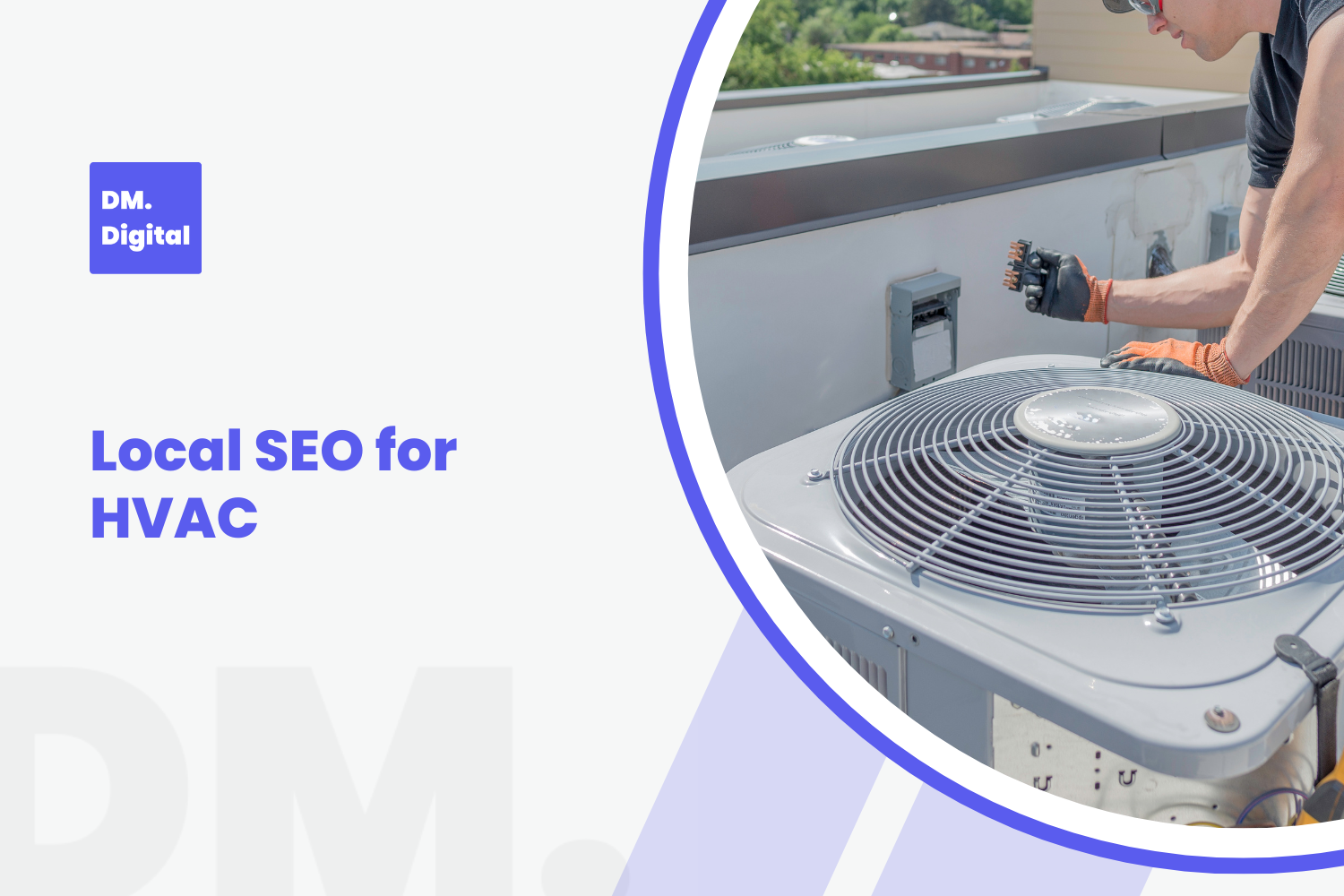
Learn how HVAC companies win emergency and seasonal searches with local SEO, from Google Business Profile setup to emergency pages, reviews, and seasonal content timing.
Learn the real difference between helpful service area pages and doorway pages, plus how to research, write, and scale local pages Google respects.
Discover the 11 elements every ranking service page shares, from a keyword-rich H1 to schema markup, plus a simple audit checklist to turn traffic into calls.
Need a website for your business?
Grow Local creates a complete, SEO-optimized website in seconds. Fill a few fields - AI does the rest. $99/month.