A company opens a second branch across town, both locations get a Google Business Profile, and within a few months the owner notices something strange. When someone searches for the service in the middle of the city, both branches show up for the same query, and neither one ranks as well as a single location would. The two offices are splitting their own traffic.
This is self-cannibalization. It happens when a business competes against itself in search instead of letting each location own the area closest to it. The signals that should push one branch up the results get divided between two, and the whole company loses visibility it already paid to build.

What Cannibalization Means for a Multi-Location Business?
Self-cannibalization in multi-location SEO is simple to describe. It is when a company's own profiles or web pages compete against each other for the same searches instead of each one owning a clear area. The business ends up bidding against itself for attention it already controls.
The waste is real. Every review, link and local signal that lands on the wrong profile, or gets split across two near-identical pages, is a signal that could have pushed one location higher. Local search rewards clarity, and overlap is the opposite of clarity.
| Symptom | What It Looks Like | Where It Comes From |
|---|
| Both branches in one result | Two of your locations appear for the same city search | Overlapping service areas or duplicate profiles |
| Weaker rankings overall | Neither location ranks as well as one would alone | Split local signals |
| Confused pages | Two city pages targeting the same town | Near-identical website content |
| Diluted reviews | Reviews spread across overlapping listings | Duplicate or unclaimed profiles |
When Two of Your Own Branches Fight for One Search
The first sign is seeing two of your locations in the same local result for a single city or keyword. It can look like good coverage at a glance. In practice it usually means neither branch is ranking as strongly as it could if it stood alone for that search.
When Google has to choose between two of your profiles for the same query, the relevance and prominence signals that would normally concentrate on one listing get spread across both. Reviews, citations and clicks that should build one branch's authority are divided. The result is two average performers where you could have had one strong one.
This branch competition tends to show up most in the overlap zone between two offices, the neighborhoods and postal codes that sit roughly halfway between them. A customer searching from that middle ground sees both, and your own listings crowd each other out of the better position.
The fix starts with recognizing that more profiles chasing one search is not more coverage. It is duplicate targeting, and it works against you. Each location should have a clear area where it is the obvious answer.
Profile Cannibalization vs Website Cannibalization
Cannibalization comes from two different places, and each needs a different fix. The first is profile cannibalization, where two Google Business Profiles overlap so much that Google cannot cleanly decide which one owns a search. This is a Business Profile and service-area problem.
The second is website cannibalization, where two or more pages on your own site target the same town or service with near-identical content. Google struggles to pick which page to rank, so it may rank neither well, or swap between them. This is a website structure problem, not a profile one.
Telling the two apart matters because the repairs are not interchangeable. Fixing overlapping service areas does nothing for duplicate location pages, and rewriting thin city pages does nothing for two profiles blanketing the same towns. Most multi-location businesses that cannibalize themselves have a bit of both.
Work through them separately. Audit the profiles and their service areas first, then audit the website's location pages for genuine, distinct content. Each layer has its own rules, which the rest of this guide lays out.
Why Proximity and Relevance Decide Which Location Shows
Google ranks local results on three things: relevance, distance and prominence. Relevance is how well a profile matches what the person searched. Distance is how close the business is to the point of search. Prominence is how well known and established the business appears to be.
There is no way to request or pay for a better local ranking. Google states this plainly, which means the only levers a business has are making each location genuinely relevant, clearly placed and well established in its own area. Buying your way past a competing branch is not an option.
Because distance is a real factor, clearly separated areas help each location win the searches nearest to it. When two branches claim overlapping territory, they muddy the distance signal for the zone between them. Keeping areas distinct lets Google match each searcher to the closest, most relevant branch.
This is the foundation for everything that follows. Clean profiles, divided service areas and distinct pages all work because they sharpen relevance, distance and prominence for one location at a time instead of blurring them across two.
One Profile Per Real Location, and Not One More
Google's rule here is short and firm. Do not create more than one page for each location of your business, whether in a single account or across multiple accounts. Governance of your profiles is the first defense against cannibalization.
Get this right and many overlap problems never start. Get it wrong, with stray duplicate listings or profiles that should have been merged, and you split your own signals before any strategy work even begins. Google Business Profile management is where this discipline lives.
Google's Rule Against Duplicate Profiles
The guideline is clear: one page per location, never more. Duplicate profiles are one of the most direct ways a multi-location business sabotages its own visibility. Two listings for the same office force Google to guess which one to rank.
When that guess happens, reviews, photos, posts and citations can scatter across both profiles. One listing might collect the reviews while the other holds the stronger link signals, so neither reaches its full strength. The authority you built gets divided for no reason.
Duplicate listings also confuse customers, who may land on an outdated version with the wrong hours or phone number. That hurts the user experience and can cost real calls. Finding and resolving duplicates is often the first cleanup step in a multi-location audit.
The practical takeaway is to treat every location as having exactly one home on Google. If a second profile exists for the same place, it needs to be addressed, not left to quietly compete with the real one.
When a Department or Practitioner Can Have Its Own Profile
There are legitimate exceptions to the one-profile rule, and they matter for clinics and firms. Publicly facing departments that operate as distinct entities can have their own page, as long as that page carries a name different from the main business. A hospital's cardiology department is a common example.
Google also names individual practitioners who may have their own profile if they serve the public. That list includes doctors, dentists, lawyers, financial planners, and insurance or real estate agents. Each of these professionals deals directly with clients, which is what qualifies them.
The limit is just as important as the permission. Support staff should not create their own profiles. A receptionist, a paralegal or a hygienist does not get a separate listing, because they are not the public-facing practitioner the rule is built around.
Used correctly, a department or practitioner profile adds clarity rather than competition. Used carelessly, it becomes another listing fighting the main business for the same searches, which is exactly the outcome to avoid.
Solo Practitioners at a Branded Firm
A single practitioner working under a branded firm is a special case. Google's guidance is that it is best for the practitioner to share a Business Profile with the organization rather than stand up a separate one. The shared profile is named with the brand plus the practitioner's name.
The reason is cannibalization again. If a solo dentist at a one-dentist practice creates a personal profile alongside the firm's profile, the two listings point at the same address, the same services and the same customers. They compete directly for the same searches.
Sharing a profile under a format like company name plus practitioner name keeps everything on one listing. The reviews, the prominence and the local signals all build in one place instead of being split between a personal and a business listing.
This only applies to the solo case. When a firm has several practitioners who each serve the public, those individual profiles can make sense. One person covering one location should stay on a single shared profile.
Separate Brands at One Address
Sometimes two genuinely different brands operate from the same building. Google's position is that separate brands at one address should not be combined into a single profile. Brands that operate independently may each have their own listing.
The distinction is whether the brands truly run as separate businesses. Two independent companies sharing an office are not the same entity, and forcing them onto one profile would misrepresent both. Each keeps its own name, category and profile.
The caution is not to blur signals in either direction. Combining two real brands confuses Google about what the listing represents. Splitting one brand into two profiles creates the duplicate problem covered earlier. The rule follows the reality of how the businesses actually operate.
For an owner, the test is simple. If customers experience two distinct businesses with their own names and identities, keep them separate. If it is one business wearing one name, it is one profile.

DM. Digital helps local service businesses dominate Google with custom-built websites.
Service Areas Without Overlap
For service-area businesses, the service area setting is where many companies accidentally compete against themselves. Two branches that both list the same towns end up blanketing identical territory, and the overlap zone becomes a battleground between your own offices.
Setting these areas with care is how a plumber, electrician or garage door company keeps each truck's home base winning its nearest work. Local SEO for service businesses lives and dies on getting this division right.
| Setting | Google's Guidance |
|---|
| Address | A service-area business should hide its address from customers |
| Number of areas | Up to 20 service areas can be set |
| How areas are defined | By cities or postal codes, not a radius |
| Overall size | Should not exceed about two hours of driving time from the base |
How Google Defines Service Areas
A service-area business is one that goes to the customer rather than having customers come to it. Google says such a business should hide its address from customers, since there is no storefront for people to visit. The listing is about the area served, not a place to walk into.
You can set up to 20 service areas, and they are defined as cities or postal codes rather than a radius on a map. That distinction matters, because cities and postal codes have real boundaries you can divide cleanly between branches.
The overall area should not be more than about two hours of driving time from where the business is based. This is a guardrail against a single profile claiming half a state. Google's help pages carry no dates and can change, so confirm the current limits before relying on them.
Understanding these limits is the starting point for dividing territory. The numbers define the box each location has to work within, and staying inside that box keeps a profile healthy.
One Central Office, One Set of Service Areas
The core rule for service-area businesses with several offices is one profile per central office, each with its own designated service area. You do not create a separate profile for every town you serve. One office, one listing, one set of areas.
A location qualifies for its own profile when it has separate service areas and separate staff. A real second office with its own crew serving its own towns is a genuine location. A list of cities you happen to drive to is not a reason for extra profiles.
This is the service-area version of the one-profile-per-location rule. Spinning up a listing for each town you cover is the fastest way to build a pile of overlapping, competing profiles that split your signals and risk problems with Google.
So the structure is clean. Each real office gets one profile. That profile's service area describes the towns that office actually serves. No ghost profiles for individual cities.
Dividing Territory Between Branches
When two branches sit close enough that their natural coverage overlaps, divide the territory deliberately. Because service areas are set by city or postal code, you can assign specific towns or codes to one branch and different ones to the other instead of letting both claim the same ground.
Draw the line along real boundaries. Give the postal codes nearest each office to that office, and split the contested middle so only one branch claims each town. The goal is that no two of your profiles list the same city.
Keep each branch's total area within the roughly two-hour driving guideline. Setting service areas larger than about two hours of driving distance was flagged as a negative factor with suspension risk, so bigger is not safer. A tight, accurate area is healthier than a sprawling one.
Done well, territory division turns two competing branches into two complementary ones. Each owns the searches closest to it, and the overlap zone that used to split your traffic now belongs cleanly to whichever branch is nearer.
Why Adding More Service Areas Is Not a Ranking Trick
It is tempting to think that adding more service areas will help a location rank in more places. The evidence says otherwise. In Whitespark's 2026 Local Search Ranking Factors, a survey of 47 experts scoring 187 factors published November 6, 2025, setting service areas in a profile ranked 152nd.
That very low placement tells you service areas are not a lever for better rankings. They describe where you work; they do not push you up the results. Stuffing a profile with towns to try to rank in all of them does not deliver more visibility.
What it does deliver is internal competition. When two of your branches both list the same towns, you create the overlap that splits your own signals. The extra areas do not win new ground, they just set your locations against each other.
Whitespark is an expert opinion survey, not a measured ranking test, so treat it as informed judgment rather than proof. Still, the lesson holds. Set service areas to reflect reality, not to game the map.
Naming and Categories That Keep Locations Distinct
Consistent naming and accurate categories help Google tell your locations apart without having them compete. The instinct to make each profile name unique, often by adding a city, usually backfires. Clean, consistent naming is what keeps signals readable.
What belongs in a name is narrow, and what does not belong can trigger trouble. Getting profile details right across every location keeps the whole set healthy.
Same Name Across All Locations
All business locations within the same country must share the same name. Every branch of a chain uses one name, not a collection of variations. They must also share the one category that best represents the business when they offer the same service.
This runs against a common instinct to differentiate each listing. Owners sometimes think varying the name per location helps Google separate them. In practice, consistency is what keeps the signals clean. Google uses the address and service area to tell locations apart, not the name.
A shared name and a shared primary category present a coherent business to Google. Each location is clearly part of the same company, serving its own area. That coherence is easier for search engines to understand than a jumble of slightly different names.
So the rule is uniformity, not creativity. One name, one best category, applied the same way at every location.
No Store Codes or City Names in the Profile Name
The public profile name is only for the real business name. Store codes do not belong in it. A format like a brand followed by a location number is not acceptable, and unnecessary information in a name can lead to suspension.
City names fall under the same caution. Adding a city to a profile name to try to separate locations or rank for that city is not how separation works. The address and service area already tell Google where each branch is. A city stuffed into the name is extra information that can put the listing at risk.
Suspension risk is the serious part here. A name that carries keywords or codes it should not can draw enforcement, and a suspended profile ranks nowhere. The downside of cosmetic name tweaks far outweighs any imagined benefit.
Keep the name honest and plain. If the sign on the building says one thing, the profile name says the same thing, with nothing bolted on.
Store Codes Belong in the Bulk Spreadsheet
Store codes do have a real job, just not in the public name. A store code is the internal ID used in Google's bulk spreadsheet import. Each location needs a unique store code, and that code is what links a spreadsheet row to an existing profile.
This is behind-the-scenes plumbing for managing many profiles at once. When a business uploads or updates locations in bulk, the store code is how Google matches each row to the right listing. It is an operational reference, not marketing copy.
Because it is internal, the store code is never shown to customers and never sits in the business name. BrightLocal, in guidance updated October 2025, notes that each location needs its own unique code to keep the import accurate.
So the two uses never mix. The public name stays clean, and the store code does its quiet work inside the management spreadsheet where it belongs.
Location Pages That Do Not Compete With Each Other
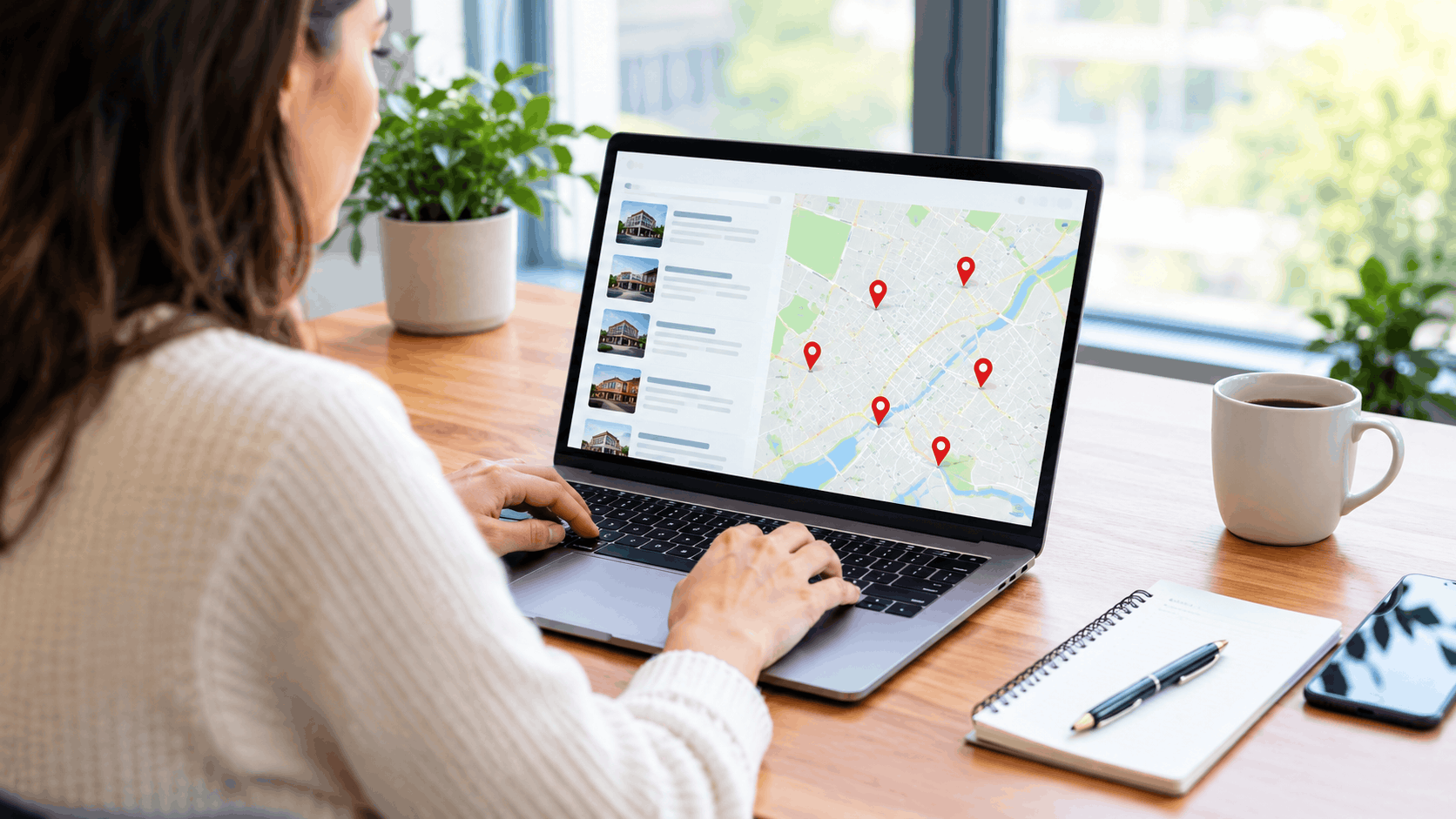
Moving from profiles to the website, near-identical city pages are a frequent cause of cannibalization. When two pages chase the same town with the same thin content, Google cannot cleanly rank either, and they drag each other down.
Each location page has to earn its own area with real content. Good content planning is what separates helpful location pages from doorway spam.
A Page Per Real Location With Genuine Local Content
A page per location helps, but only when it carries genuinely local information. A page that simply swaps one town name for another across an otherwise identical template does not count. Each location page needs real, distinct content tied to that place.
Distinct content means things only true of that branch. The actual address and service area, the staff who work there, the specific neighborhoods served, directions and parking, local projects or conditions, and reviews from that location's customers all make a page genuinely its own.
The more a page reflects the real operation at that location, the easier it is for Google to rank it for the right searches without confusing it for a sibling page. Specificity is the whole point. A page that could describe any branch helps no branch.
Build each location page as if it were the only page for a standalone business in that town. That mindset produces the distinct, useful content that avoids internal competition.
The Doorway Page Trap
Google's spam policies name a specific trap. Having multiple domain names or pages targeted at specific regions or cities that funnel users to one page is listed as doorway abuse. Dozens of near-identical city pages that all push to the same contact point fall squarely into this.
The temptation is understandable. A business wants to appear for every surrounding town, so it spins up a page for each one. When those pages are thin and repetitive, existing only to catch a city search before funneling the visitor onward, they cross into spam territory.
The danger is twofold. The pages compete with each other and with your real location pages, splitting signals, and they expose the site to spam enforcement. Where a site has been hit for this kind of problem, cleaning it up does not always restore lost ground quickly.
The line is genuine value. A page for a town you truly serve, with real local content, is fine. A mass of lookalike pages built only to capture city keywords is the abuse Google warns about.
Structured Data for Each Location
Structured data helps Google read each location correctly. Google's LocalBusiness markup requires a name and address at minimum, and recommends using the most specific business subtype rather than the generic one. That specificity sharpens relevance.
For multi-location sites, the markup supports a store-locator style URL for each location, so every branch has its own addressable page in the data. It also supports a nested department property, which can carry its own hours and phone number for a department within a location.
Used well, structured data reinforces the separation you built into the pages themselves. Each location page describes one real place, and the markup confirms that place's name, address and details to search engines in a format they parse cleanly.
This is a technical layer that supports, not replaces, genuine content. The markup tells Google what a page is about; the content proves it. Both have to point at the same distinct location for the page to work.
Internal Linking Between Location Pages
How you link location pages to each other shapes how Google understands your site. A clear structure, with a locations hub linking out to each branch page and each branch page linking back, helps search engines map the relationships without blending the pages together.
Google's John Mueller said in March 2022 office hours that internal linking is super critical to SEO. That is a dated statement rather than a ranking formula, so treat it as a reminder of importance, not a precise rule. The principle still holds up.
The aim is a structure that keeps each location distinct while showing they belong to one business. Link with descriptive anchor text that names the location or its area, so both users and Google know where a link leads. Avoid linking every page to every other page in a way that muddies the hierarchy.
A tidy internal link structure also spreads authority sensibly across the site. Pages that earn links pass some of that value through the structure, helping the whole set of location pages rather than isolating any one of them.
DM. Digital helps local service businesses dominate Google with custom-built websites.
Governance and Access Across Many Profiles
The management layer is where duplicate profiles and overlapping territories get prevented or created. Who owns what, how access is shared, and how verification works all shape whether a multi-location setup stays clean over time.
Clean governance is quiet work that pays off by keeping the structure stable as locations, staff and agencies change. Auditing the profile setup is often where governance problems first surface.
Business Groups Instead of Shared Passwords
Google offers business groups so co-workers can share access to sets of profiles without sharing a login. Instead of passing one password around, each person gets their own access through the group. That alone removes a major security and continuity risk.
Each group has its own owners and managers, and anyone added to a group gets access to the current and future profiles within it. For a verified business group, no profile in the group can be owned by someone else, which keeps control consolidated.
Google advises one account per business or brand, and each group needs its own import spreadsheet. Following that one-account guidance keeps ownership tidy and makes it harder for stray duplicate profiles to appear under scattered logins.
For a growing company, business groups are how you scale access without losing control. They replace the fragile habit of shared passwords with a structure Google actually supports.
Owner and Manager Roles
Roles decide who can do what. Owners can add or remove users and delete a profile. Managers cannot add or remove users and cannot remove the profile. That difference matters when you decide who gets which level of access.
Only one person is the primary owner of a profile. New users must wait 7 days before they can remove other users or transfer primary ownership. That waiting period is a safeguard against a newly added account seizing control too quickly.
Who holds primary ownership is a contract decision Google does not make for you. In a franchise, whether the franchisor or the franchisee holds primary ownership is settled in the agreement between them, not by a Google setting. Decide it deliberately before building out profiles.
Assigning roles with care keeps the right people in control and limits what a departing employee or vendor can do. Owners for the people who must have full control, managers for everyone who only needs to update content.
When Bulk Verification Applies
Bulk verification, sometimes called chain verification, is for 10 or more locations of the same business. It is requested in Business Profile Manager under Verifications, then Chain. Uploading a spreadsheet alone does not send a verification request.
Several limits apply. Duplicates and suspended profiles do not count toward the 10. Service-area businesses are not eligible for bulk verification unless their locations are also customer-facing during regular hours. Agencies holding more than one business in a single account cannot bulk verify.
There is also no fixed timeline. Google publishes no bulk verification turnaround time, so a business cannot count on it finishing by any given date. Other service-area businesses that do not qualify verify location by location instead.
Knowing whether you qualify shapes how you roll out many locations. A 10-plus storefront chain may use bulk verification, while a smaller set or a service-area operation works through profiles individually.

Reviews and Prominence by Location
Prominence has to be built at every location, not borrowed from headquarters. When reviews and visibility signals are managed only at the main office, the branches lean on a parent that cannot carry them, and each one stays weaker than it should.
The data makes the case for handling reviews and visibility branch by branch. Review response at every location is a core part of keeping each branch prominent.
Answering Reviews at Every Location
SOCi's Local Visibility Index 2024, covering 2,791 multi-location companies and about 2.8 million locations in August 2024, found a wide gap in how brands answer reviews. High-visibility brands responded to 80.5% of Google reviews in 2.1 days on average.
Average brands responded to 45.1% of reviews in about 6 days, and low-visibility brands responded to just 10.9% in 12 days on average. The pattern lines up cleanly: the brands that answer more reviews, faster, are the more visible ones.
Responding to reviews is a per-location job because reviews land on each location's profile. A fast, thoughtful reply on one branch's listing builds that branch's prominence and signals an active, engaged business to both customers and Google.
SOCi sells multi-location software and its sample skews to larger brands, so treat these figures as the behavior of big operators rather than a small-business average. The direction still matters. Answer reviews everywhere, not only at headquarters.
Claiming and Maintaining Each Profile
Claiming a profile is the baseline, and most large operators clear it. SOCi's 2024 index found 97.8% of the profiles it studied were claimed. For a multi-location business, an unclaimed branch profile is a visibility gap and a cannibalization risk, since an unmanaged listing can drift or duplicate.
Visibility itself remains hard-won. SOCi's 2026 Local Visibility Index, covering more than 350,000 locations across 2,751 brands, found brand locations appeared in the Google 3-Pack 35.9% of the time on average. Even well-run brands are not in the top local results most of the time.
That number frames maintenance as an ongoing, per-location job. Claiming a profile once is not enough. Each branch needs current hours, accurate categories, fresh photos and regular attention to hold and improve its position.
Treat every location profile as a living asset. The ones that stay accurate, active and well-tended are the ones with a real shot at the limited 3-Pack spots in their own area.
Hybrid Headquarters and Location Marketing
How a company splits marketing between headquarters and the branches is a governance choice. BrightLocal's Brand Beacon Report from February 2024, a survey of 200 multi-location and franchise marketing decision-makers in the US, UK and Canada, found 45% use a hybrid of central headquarters and location-level marketing.
That hybrid model keeps brand consistency at the center while letting each location handle the local work that only it can do well, like responding to its own reviews and keeping its own details current. It balances control with local relevance.
The same survey found 46% of high performers focus on reputation management, versus 30% of average performers, based on self-reported answers. The higher performers put more weight on reviews and reputation, which ties back to the per-location response gap.
This is a 200-person survey, not measured performance, so read it as informed opinion rather than proof. The takeaway for an owner is to decide deliberately what the center controls and what each branch owns, with reputation handled close to the ground.
DM. Digital helps local service businesses dominate Google with custom-built websites.
How DM. Digital Manages Multi-Location SEO
DM. Digital is an SEO agency that helps local businesses across the entire United States get found on Google Search, Google Maps and AI tools. For multi-location companies, that work runs from a full audit of every location through clean profile and page setup to ongoing monthly management.
The approach treats governance first, then builds visibility on top of it. Cities named in our work are examples of where clients operate, never a limit on where we work.
Discovery and Audit of Every Location
An engagement starts with a conversation. The prospect calls or leaves a message, founder Dan Milstein calls back, and the two talk through the business, its locations and its goals. Dan has been doing SEO since 2018.
From there, Dan runs an audit and then sends a proposal. For a multi-location business, the audit looks at every location, not just the flagship. It covers technical, on-page, content, link, local and AI visibility across the whole set of profiles and pages.
This is where cannibalization gets diagnosed. The audit surfaces duplicate profiles, overlapping service areas and near-identical location pages, so the problems are mapped before any work begins. You see the full picture before committing.
The audit also sets a baseline. Knowing where each location stands at the start is how progress gets measured honestly later, without misreading normal search fluctuation as a win or a loss.
Profiles, Pages and Service Areas Set Up Cleanly
DM. Digital sells one monthly package rather than one-time projects. It covers the website build and ongoing management, Google Business Profile management with weekly posts, content production, backlinks, citations and press releases, all under a single monthly fee.
For multi-location work, that means profiles, location pages and service areas set up to the rules in this guide. One clean profile per real location, service areas divided so branches do not blanket the same towns, and distinct location pages that each earn their own area.
Websites are built as custom code on the agency's own platform rather than on WordPress, Wix or Squarespace. The build and the profile work stay coordinated, so the site structure and the Business Profiles reinforce each other instead of pulling in different directions.
Because it is one package from one team, the website, the profiles and the AI visibility work are handled together. Clients pay one monthly fee and never pay separate vendors.
Monthly Reporting and What the Client Keeps
Clients get monthly reports covering leads, traffic, domain rating, backlink totals and AI mentions, plus a live lead dashboard while the engagement is active. The reporting is built on leads, so an owner can see what the work is producing for each location.
Clients always keep their own domain, Google Business Profile and Google and email accounts. Leads from the website go straight to the client's own business email, so they keep arriving even after an engagement ends. Nothing important leaves with the agency.
There is no minimum commitment, and either side can end the engagement with 30 days notice. Engagements start at a budget of $5,000 per month and grow from there, with the specifics discussed on the call.
For owners who want a low-cost, self-serve start instead, Grow Local (growlocal.build) is a website builder from the same company at $99 per month, and users can later upgrade to the full service.
Keep Each Location Winning Its Own Area
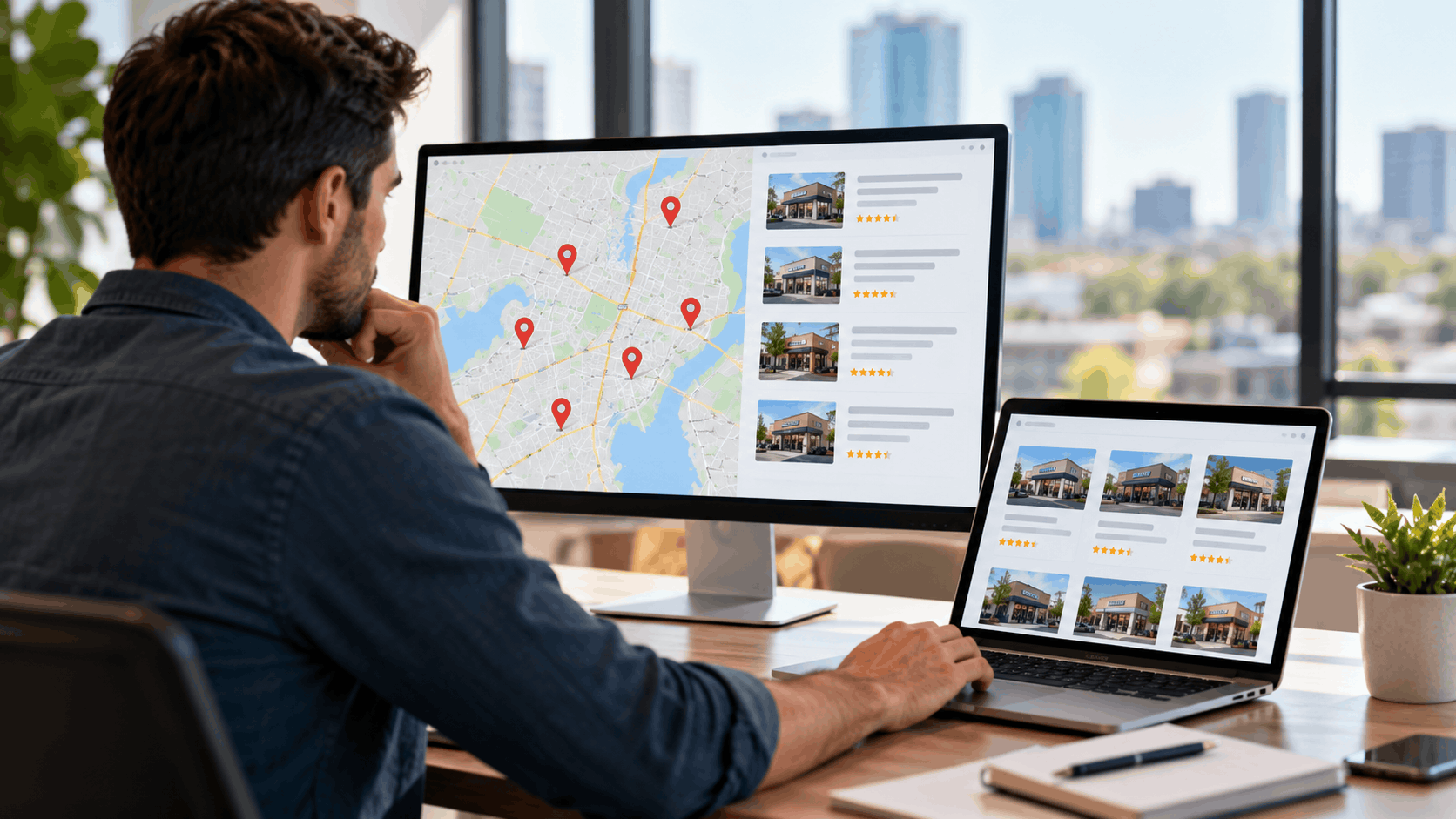
Multi-location visibility comes down to governance: one clean profile per real location, service areas divided so branches do not overlap, consistent naming, distinct location pages, and reviews answered at every branch. Done right, each location owns its area instead of fighting the one next door.
An engagement starts with a call to (775) 843-8004 or a message, a callback from Dan Milstein, a conversation, an audit of every location, and then a proposal. Reach out when you are ready to stop your own branches from competing against each other.